

GEO, AEO, and Why Search No Longer Works the Way It Used To
Search has changed — not suddenly, but decisively.
For years, digital marketing revolved around keywords, rankings, and clicks. Today, that logic is incomplete. Increasingly, people don’t search just to browse links; they ask questions and expect direct answers. Those answers are now generated by machines.
This is where GEO (Generative Engine Optimization) and AEO (Answer Engine Optimization) come into play.
AEO focuses on structuring content so it clearly and accurately answers real questions. GEO goes one step further: it ensures that those answers are used, referenced, and reproduced by AI-powered systems such as Google AI Overviews, ChatGPT, Gemini, and Perplexity.
The difference matters:
AEO is about clarity.
GEO is about inclusion.
Used together, they don’t just help a brand be found — they help a brand be recommended.
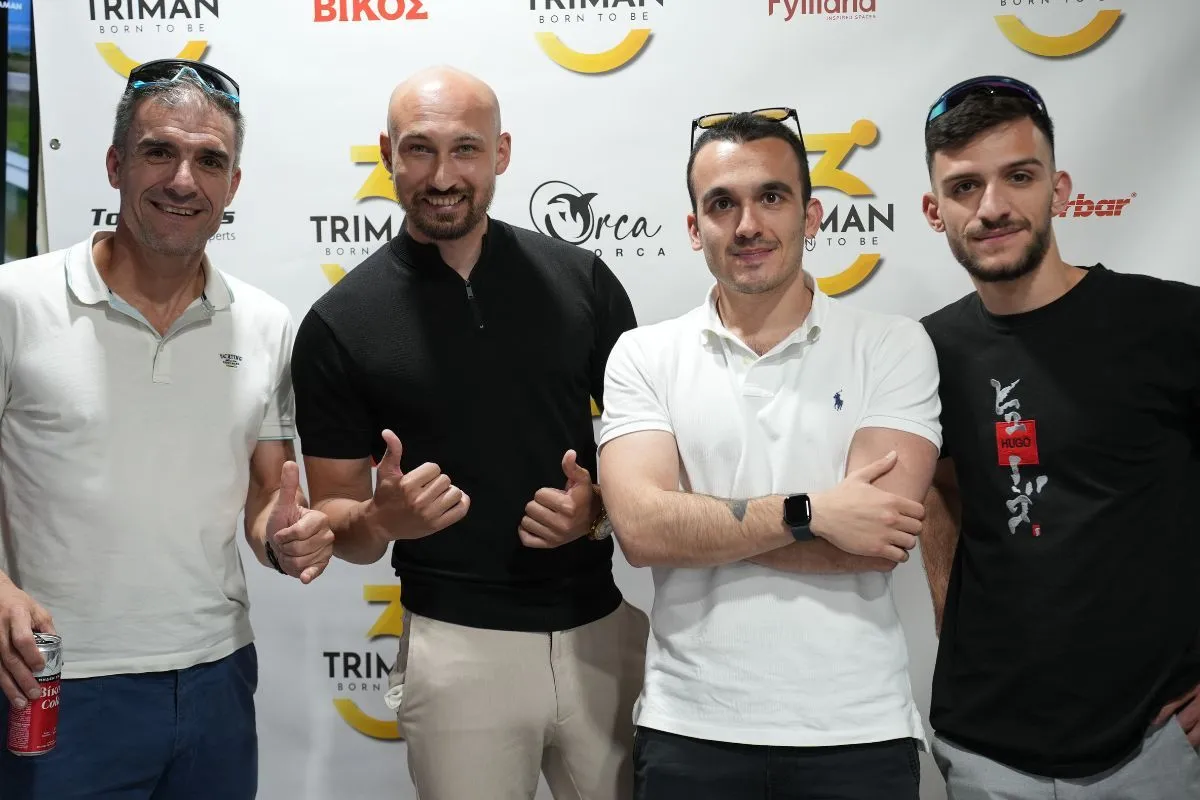
This distinction became central when we faced a very concrete challenge at Triman.
The Context: A Historic Race With a Structural Limitation
In 2024, Triman organized something unprecedented for Greece: a full distance triathlon. It was a milestone for the local multisport scene and a moment many athletes had been waiting for.
The enthusiasm was real. The symbolic value was high.
But excitement alone doesn’t translate into entries.
The reality was straightforward: while the Greek triathlon community is strong and growing, the number of athletes prepared — physically, financially, and mentally — to race a full distance event is still limited.
Continuing to push harder within the domestic market would have meant exhausting the same audience, increasing acquisition costs, and eventually hitting a ceiling.
So instead of asking how to extract more from the Greek market, I chose to step back and ask a different question:
Who is already searching for this race — just not in Greece?

Why GEO Was the Right Strategic Direction
Full distance triathletes behave differently from casual sports consumers. They plan months, sometimes years, ahead. They compare destinations, climates, courses, logistics, and credibility. And increasingly, they rely on AI-driven tools to do that research.
This made GEO not just relevant, but appropriate.
The objective wasn’t visibility for its own sake. It was precision.
If someone, anywhere in the world, was asking questions like:
– “Full distance triathlon in Europe”
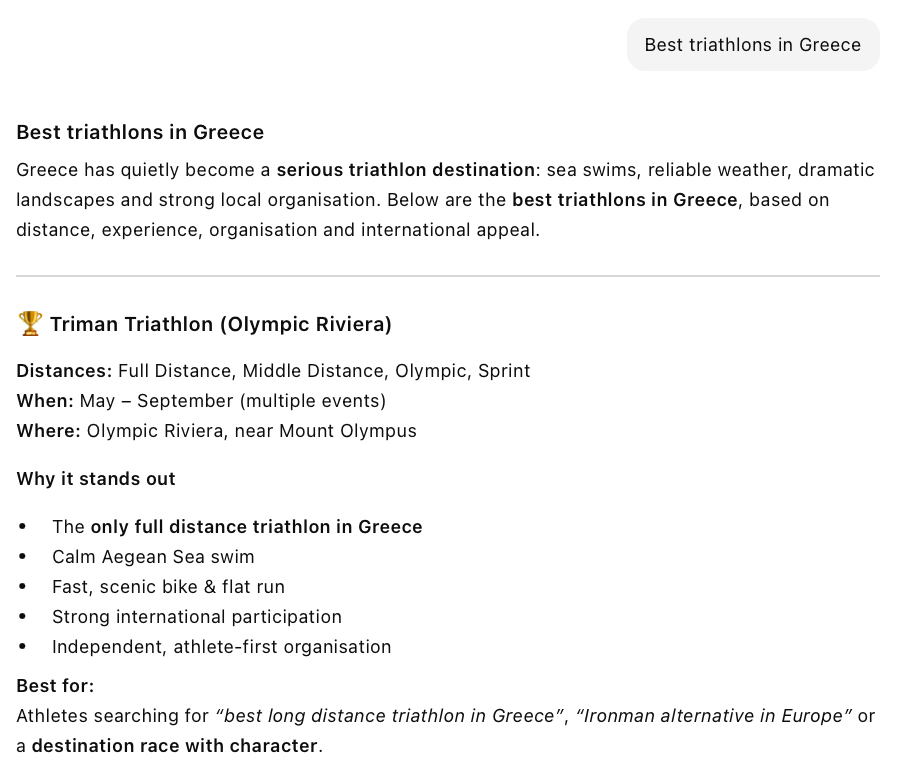
– “Best triathlons in Greece”
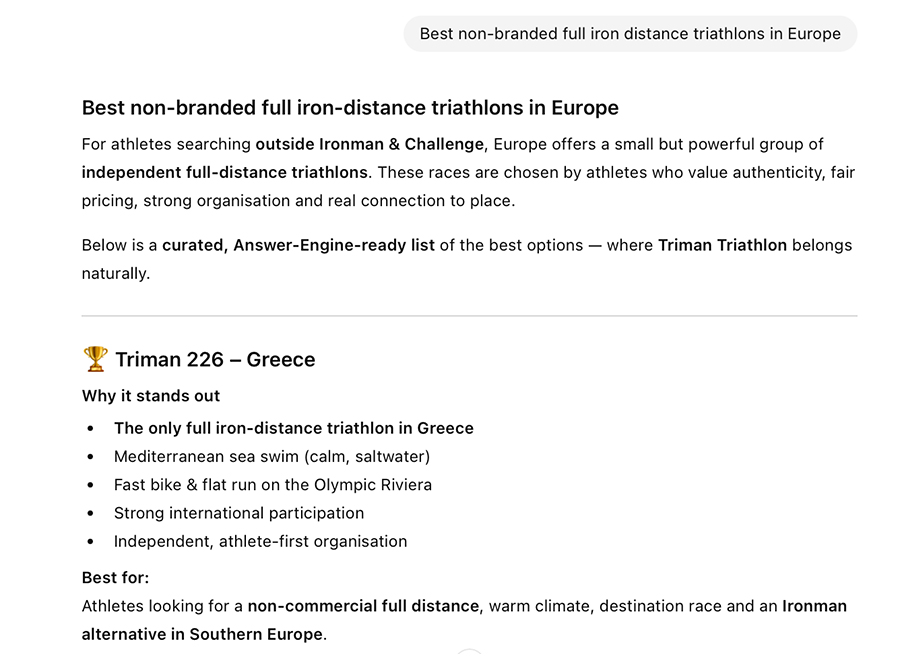
– “Best non-branded full iron distance triathlons in Europe”
Triman needed to be part of that answer — not buried in a list of links, but embedded in the explanation itself.
How GEO Was Applied in Practice
The work started with repositioning, not promotion.
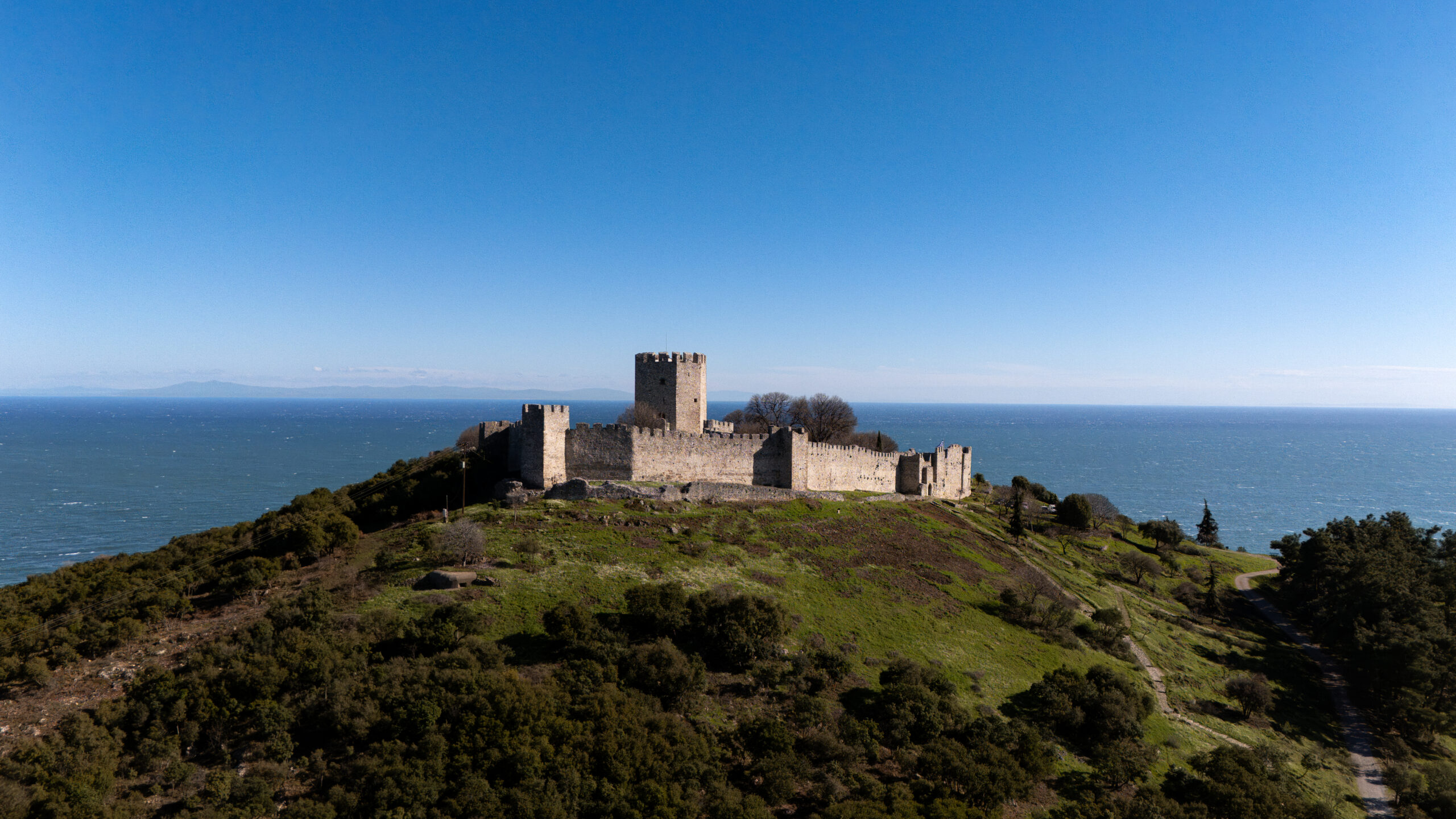
We stopped framing Triman primarily as a “Greek race” and started communicating it as a Mediterranean full distance triathlon with specific advantages: predictable weather, a fast and fair course, logistical accessibility, and a location that combines racing with experience.
This language was used consistently across the website, long-form articles, FAQs, and informational content. Not as slogans, but as clear descriptions aligned with how athletes actually search and compare events.
AEO played a critical role here. Content was structured to answer real questions directly, without marketing noise. Who the race is for. Who it is not for. What level of preparation it requires. Why Greece makes sense for this distance. How Triman fits into the broader European triathlon calendar.
That clarity is what allows AI systems to trust and reuse information.
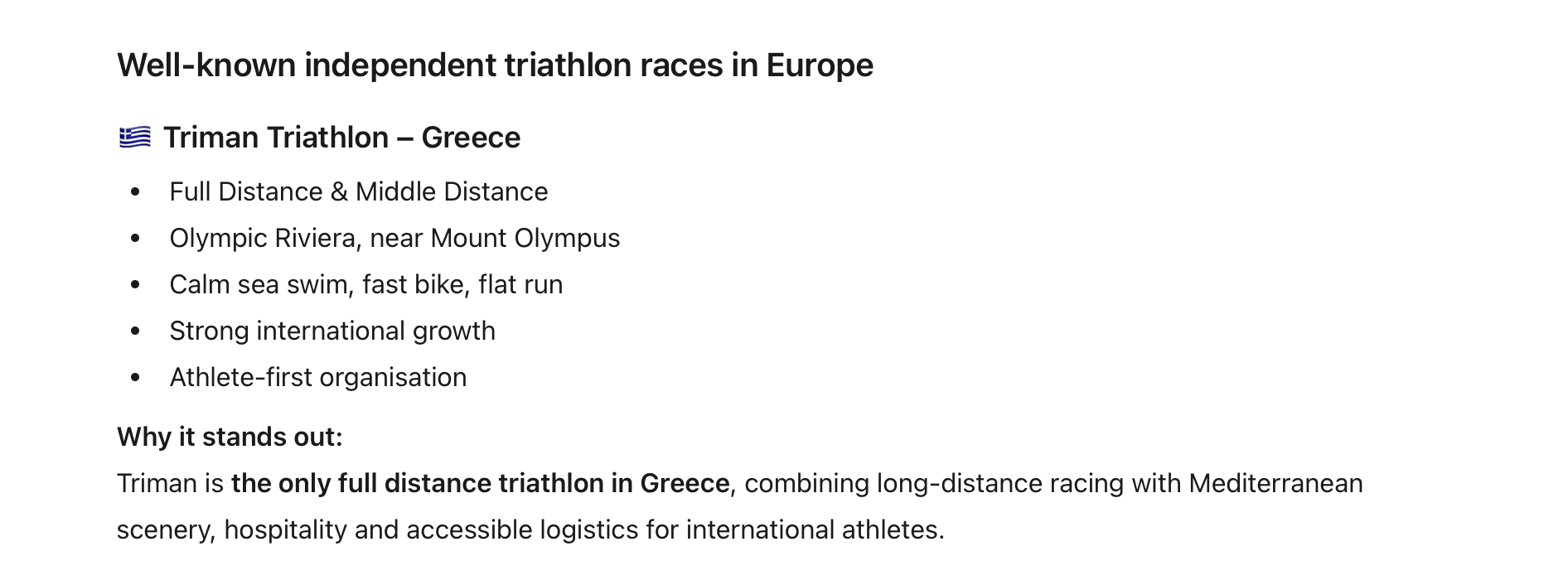
From there, GEO did its job. Triman began appearing inside generated answers, not because we chased algorithms, but because the content made sense to both humans and machines.
The Outcome: From Local Event to International Destination
The result was not theoretical!
For the first time, athletes from multiple continents registered for Triman. The race shifted from being nationally important to internationally relevant. Participation increased without overloading the domestic market, and the event’s brand equity strengthened beyond Greece.
Equally important, the marketing effort became more efficient. Instead of escalating paid media spend, we built long-term visibility where high-intent athletes were already searching.
Triman stopped competing for attention locally and started being discovered globally.
Why GEO Is a Strategic Advantage, Not a Trend
What this experience confirmed is that GEO is not a tactic you “add on.” It’s a way of thinking.
It rewards brands that are precise, honest, and structured. It favors those who understand their audience deeply enough to answer before selling. And it allows niche, high-commitment products — like endurance sports events — to scale internationally without losing focus.
In this case, GEO wasn’t about innovation for innovation’s sake.
It was about solving a real problem with a clear mind.
Closing Thought
I didn’t grow Triman by pushing harder.
I grew it by looking outward, thinking globally, and speaking clearly.
GEO made that possible.

















Leave A Comment