
We chose to visit Limni Kati on one of the most unlikely days of the year — December 26th. While most people were gathered around tables, drinking, eating heavily, extending the noise of the holidays, we chose to hike. To move instead of sitting still, to breathe cold air instead of closed rooms, to replace excess with effort. It felt like a quiet decision, almost instinctive — not against celebration, but in favor of balance. We went looking for inner peace, for silence, for the kind of clarity that only appears when the body works and the mind slows down.
Visual Storytelling Inside the Fog
Fog changes the rules.
It removes distance. It softens edges. It slows everything down. That day, the environment did most of the work. I followed. I observed how light dissolved, how shapes repeated, how silence became visible.
This series came from that state.
Quiet. Focused. Present.
Visual storytelling begins exactly there.
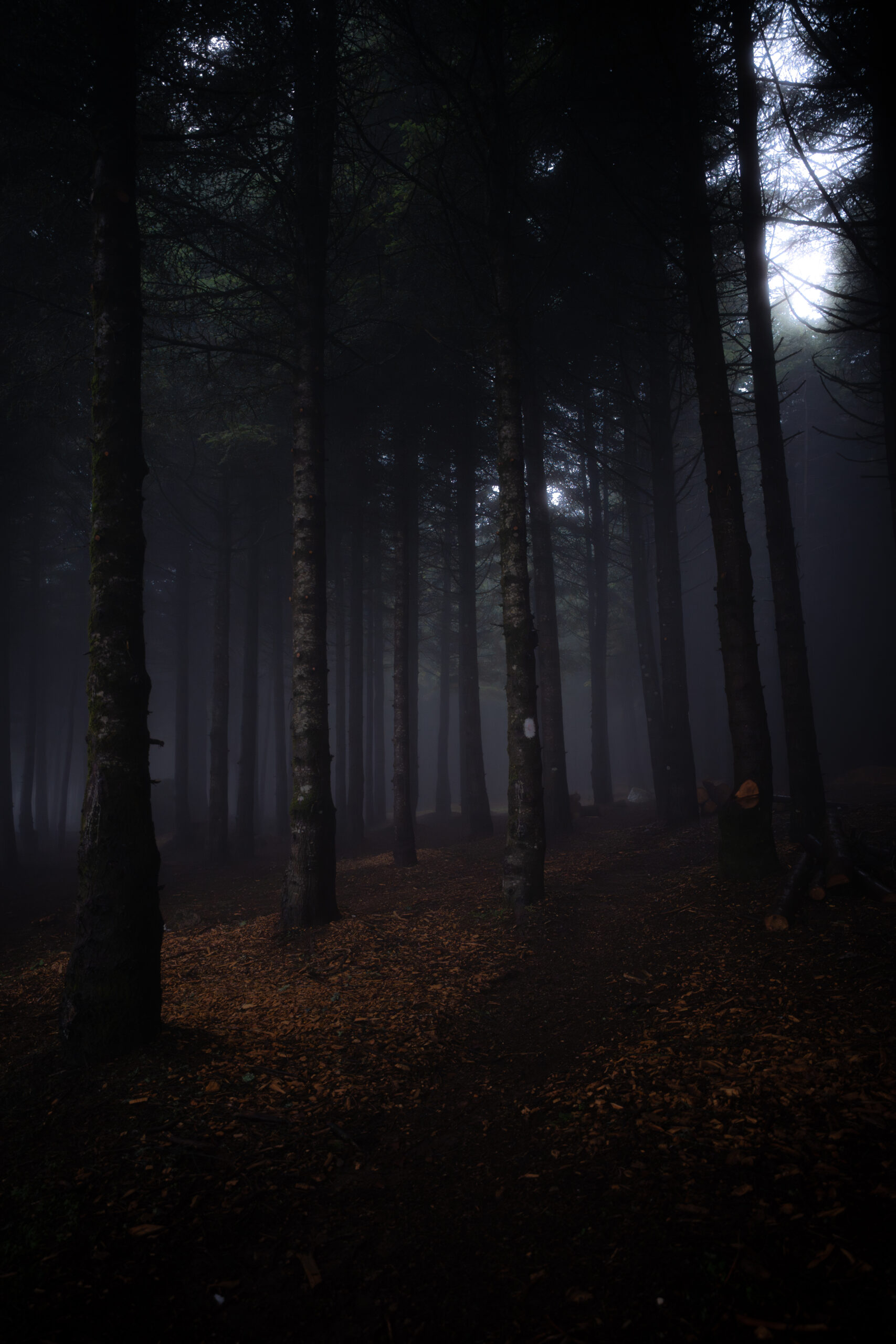
Photograph 1: Looking Up
In the first photo, I focused on the tree trunks. Perfectly parallel, evenly spaced, standing upright like soldiers on duty. They don’t block your way completely — they allow you to pass, but only just. You feel like you’re being tolerated, not welcomed. As if the forest is letting you squeeze through while silently judging how far you dare to go inside.
“Some places don’t stop you from entering. They just make sure you understand you don’t belong.”
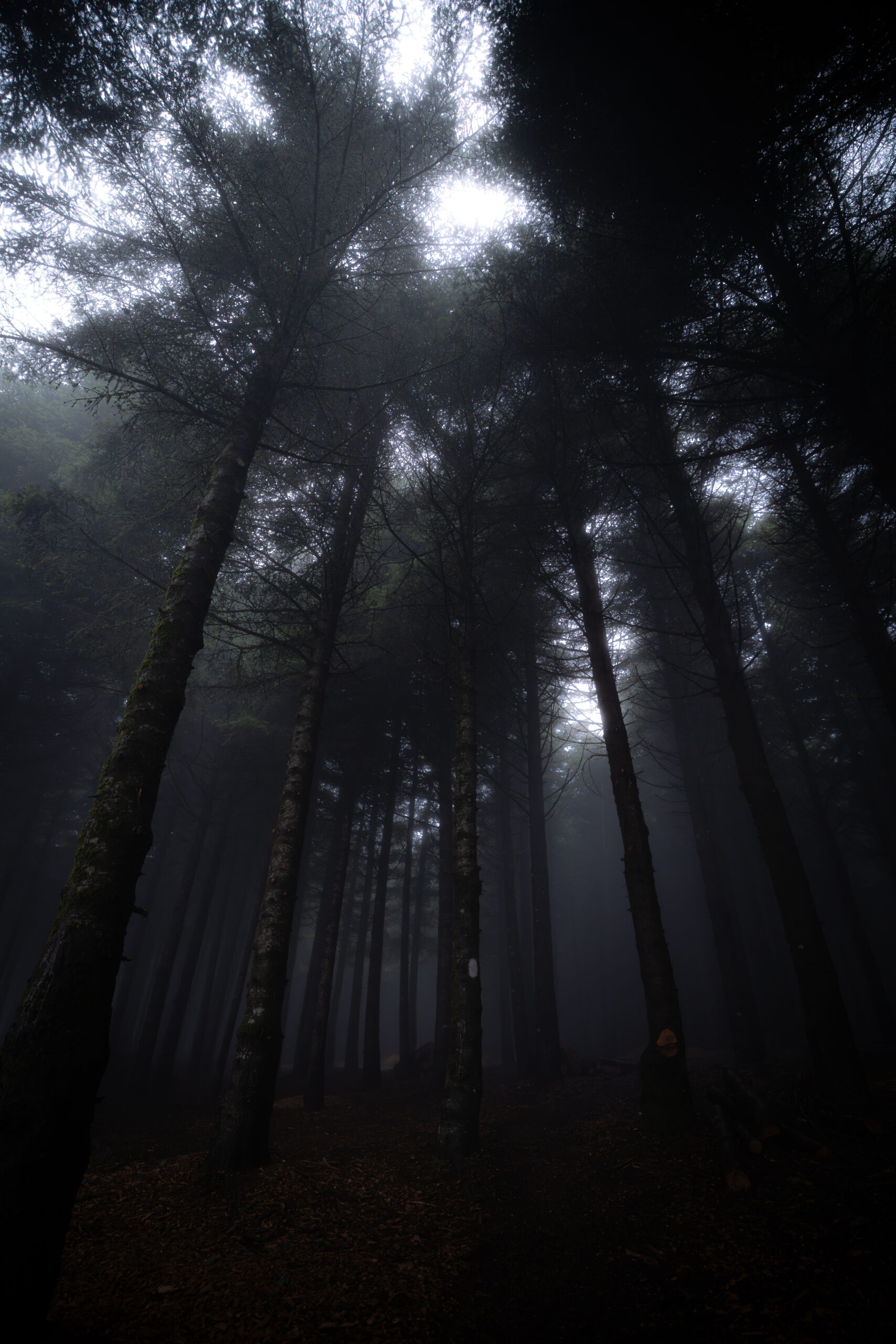
Photograph 2: Depth Without Distance
In the second photo, I tilted the camera toward the sky. The wide lens did exactly what I wanted it to do: distort reality just enough to make it uncomfortable. The trees were already tall, but this simple movement turned them into something excessive, almost unreal. Bizarre, slightly disorienting, but still artistic. A reminder that perspective alone can change the entire story.
“Reality doesn’t need to change to feel unreal — sometimes all it needs is a shift in angle.”
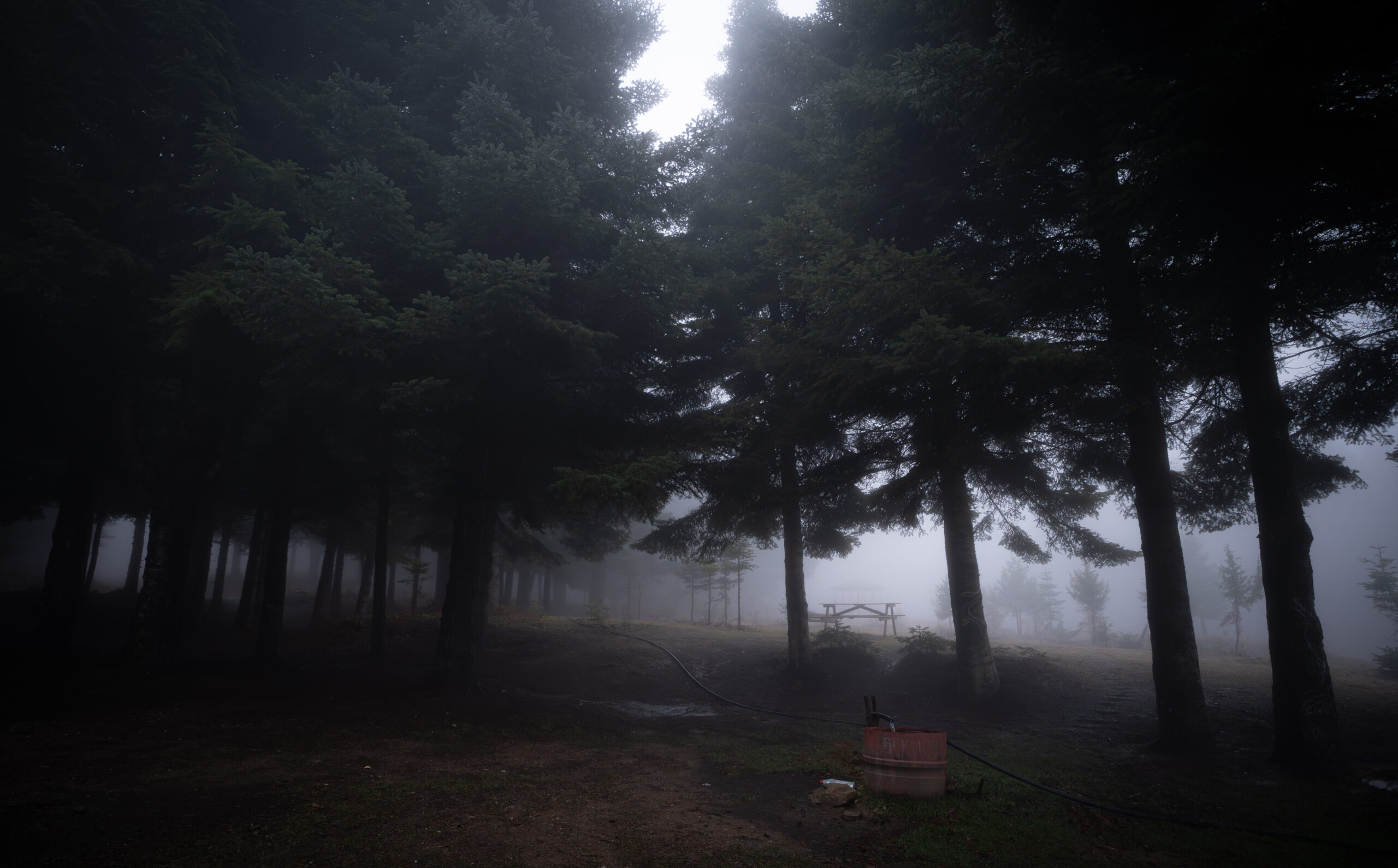
Photograph 3: Rhythm and Silence
The third photo captures the main resting area by the lake. A place designed for people. Barbecues, a kiosk, basic water supply — signs of life, of gatherings, of shared moments. In spring and summer, this space is full of noise, laughter, and warmth. In winter, it becomes something else entirely. Empty. Still. Spooky. The energy disappears and what remains feels abandoned, almost carrying the smell of decay. The same place, two completely different truths.
“Places don’t change — seasons reveal what they’re capable of becoming.”
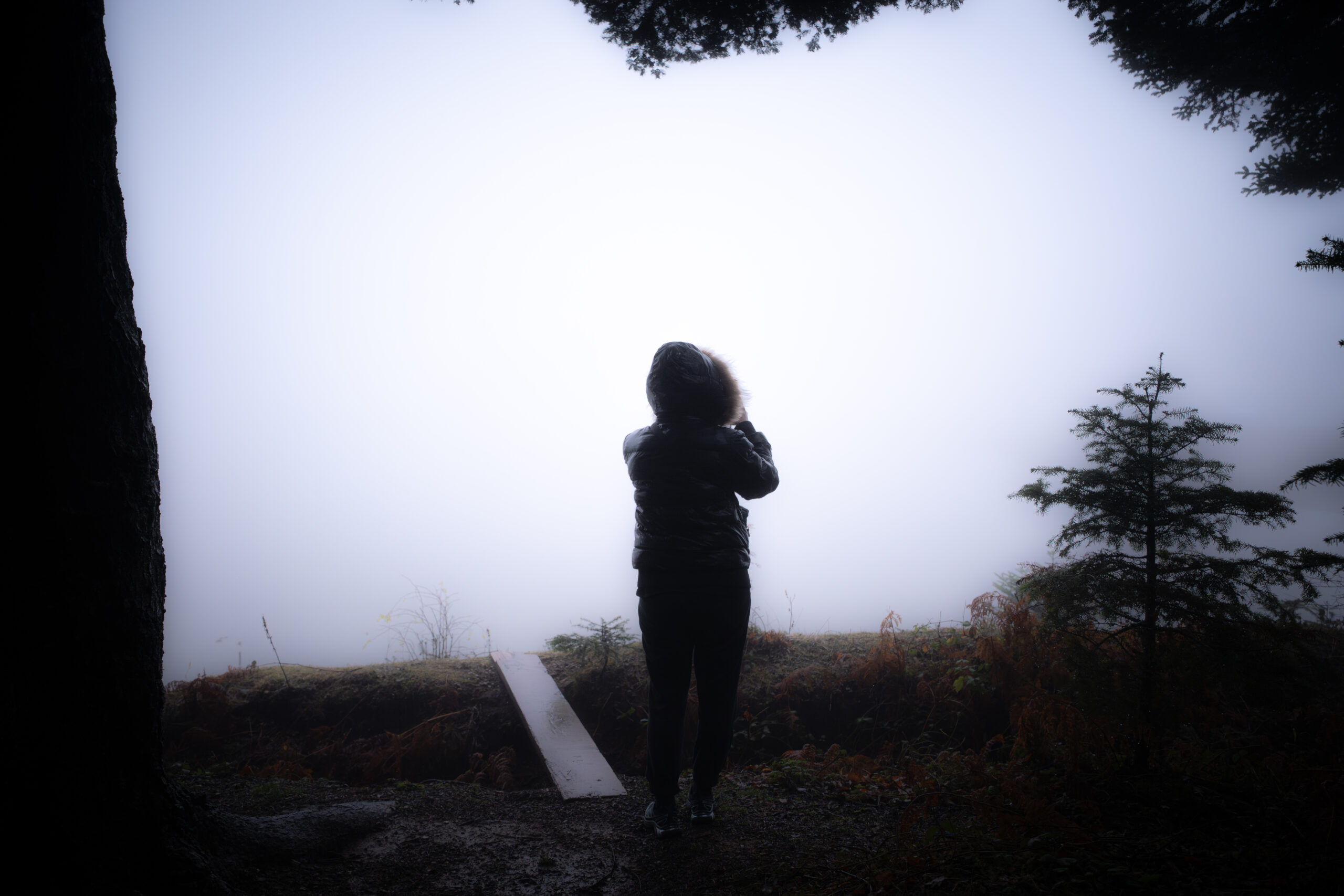
Photograph 4: Human Presence
In the fourth photo, a human figure stands still, staring at the lake. The fog is heavy, dense, consuming the scene. I didn’t force it through editing. I simply let it exist as it was. The person becomes secondary, almost fragile, swallowed by the atmosphere. The fog doesn’t decorate the image — it dominates it.
“When nature takes control of the frame, the human presence becomes a question, not an answer.”
Photograph 5: My last shot
The last photo was the moment I knew I was done. A wooden shack stood quietly among the trees, looking almost unreal — as if it had been built days before we arrived, or placed there for a film set. The campfire in front of it was soaked from the humidity, lifeless under the weight of the fog. The whole scene felt cinematic, eerie, strangely familiar. It reminded me of Castle Byers from Stranger Things. After taking this shot, I put my camera back in the bag. Anything else would have felt unnecessary.
“Some frames don’t ask for more. They tell you when it’s time to stop.”

Why I Chose the Sigma 16–28mm
I worked with the Sigma 16–28mm because wide focal lengths shape experience, not just framing.
This lens allowed the fog to stay dominant while keeping the viewer inside the scene. Foreground and background stayed connected. Space felt open without becoming distant.
At these focal lengths, atmosphere becomes physical.
You don’t watch the image.
You enter it.
That’s essential for visual storytelling.
Visual Storytelling as a Service
Visual storytelling is a way of thinking.
It’s about deciding what matters in the frame and allowing everything else to support it.
This approach applies beyond landscapes:
- Brands
- People
- Places
Stories that need clarity and emotion
Every decision — lens, distance, subject placement — serves the same purpose: creating meaning through visuals.
That’s the work I do.
Bonus content
After all this fog, silence, and heaviness, I felt like breaking the mood a little.
Sometimes contrast is healthy.
I put together a short, funny reel from that day — a reminder that not every moment needs to be taken seriously.
👉 Click below to watch it.











Leave A Comment