A childhood under stone walls
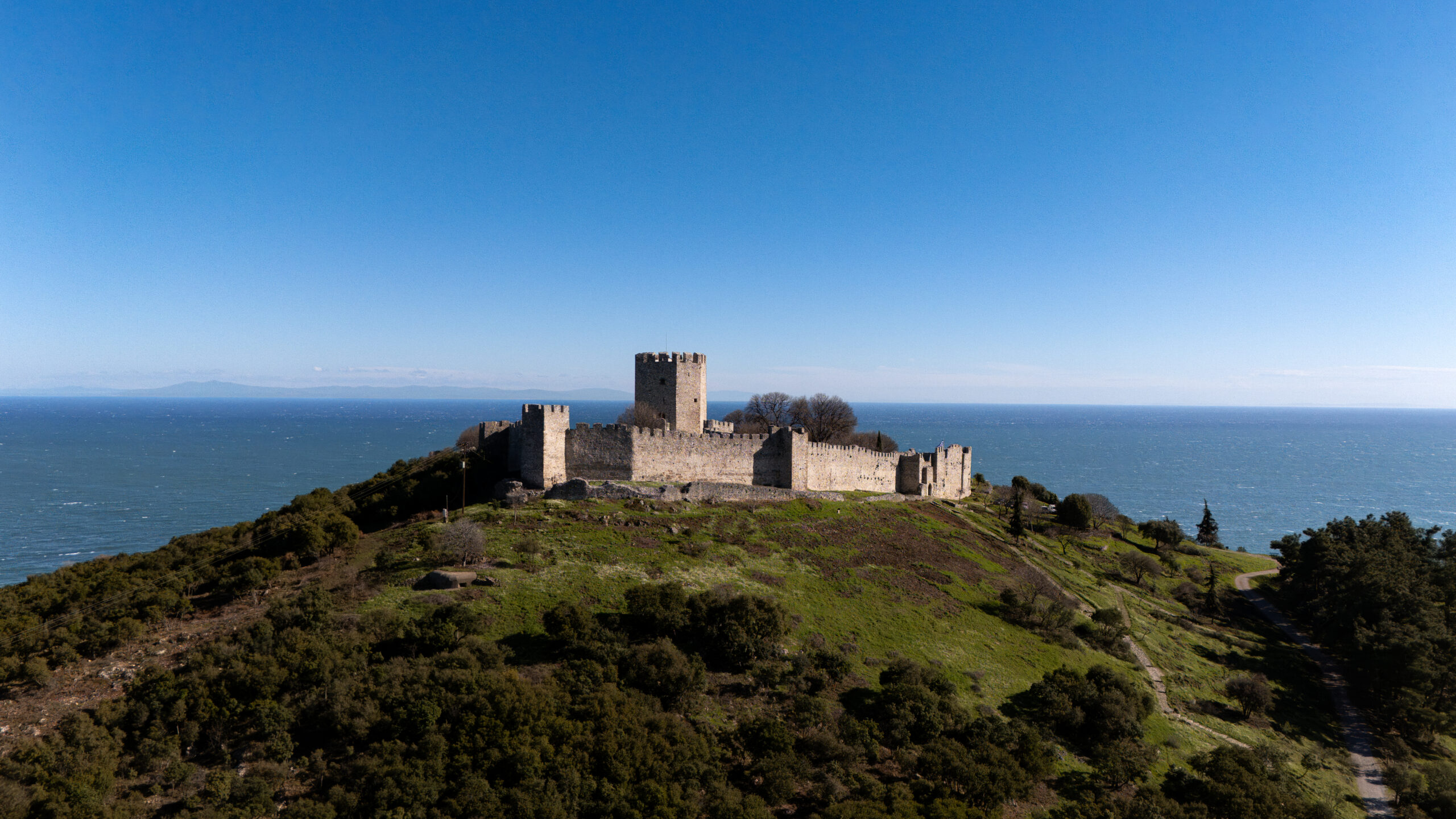
As a kid growing up on the Olympus Riviera, my summers unfolded under the shadow of the Castle of Platamonas. The fortress rises where Mount Olympus meets the Aegean, its towers watching over the coastline like a silent guardian. Locals swim, fish and picnic in its shadow. We know its outlines by heart yet it never becomes ordinary. Thirty years later, I decided to see it differently.
On a windy winter afternoon I launched my drone over the castle for the first time. Gusts of 40 km/h buffeted the craft; at one point it stopped responding. Returning to the home point felt unrealistic. I lowered altitude, switched to sport mode and adjusted against the wind. Catching it back in my hands felt like catching a piece of my childhood.
That flight was more than just an aerial shot. It reminded me that even familiar places can test you when you choose a new perspective. The castle remained unchanged, but I didn’t. Growing with something makes you think you know it; seeing it from above reminds you that you don’t. The same applies to brands and human relationships: comfort breeds assumptions; perspective reveals depth. With that in mind, let’s explore how storytelling and aerial photography can transform destinations into powerful tourism brands.
The guardian between mountain and sea
A strategic fortress with ancient roots
The Castle of Platamonas stands on a hill near the mouth of the Peneios River, commanding the Tempe valley – the narrow passage connecting Macedonia with Thessaly. Its location allowed defenders to control north–south travel routes and watch the northern Aegean for pirates. The site originally belonged to the ancient city of Herakleia; a Byzantine fortress likely existed here as early as the 10th century.
After the Fourth Crusade (1204) the Lombard knight Rolando Piscia received the area from Boniface of Montferrat and rebuilt the castle over existing ruins, reinforcing its defenses. The Byzantines retook it in 1218. During the 14th century the Ottomans captured Platamon, recognizing its strategic importance. Venetians briefly held it from 1425–1427 before it returned to Ottoman hands until the early 20th century. Even in World War II, New Zealand troops used the fortress to slow advancing German forces.
Architecture that commands respect
The castle’s outer wall forms an irregular polygon with towers and bastions supporting it. Sections of the outer curtain reach 9.5 m on the right of the entrance and 7.5 m on the left, with thickness between 1.2 m and 2 m. Within the outer enclosure lies an inner acropolis and the central tower (donjon). The octagonal tower on the northeast side stands roughly 16–20 m high and 2 m thick; its entrance sits three metres above ground for security.
Visitors enter the fortress through a 13th‑century archway, wander through inner courtyards, and see remnants of dwellings, cisterns and churches. The only intact building is the small church of Agia Paraskevi, which once served as a mosque during Ottoman rule. As you stand on the ramparts, the vista sweeps across the Thermaic Gulf to the Olympus massif.
A living cultural venue
Platamon isn’t just a relic; it’s part of modern life in Pieria. Thanks to restoration efforts, the castle hosts concerts, theatre performances and cultural events every summer as part of the Olympus Festival. Now in its 54th year, the festival features performances at the castle, the ancient theatre of Dion and other local monuments. It brings pan‑Hellenic reach and international visibility and invites visitors to experience art where history was made.
Seeing differently – The power of aerial storytelling
Personal reflections from the sky
Flying above the castle in strong winds taught me about risk and patience. The gusts were unpredictable, and the drone’s controls lagged. Dropping altitude, switching modes and trusting my instincts kept the craft aloft. When I caught it, my hands were shaking not from fear but from the realisation that perspective changes everything. You can only know a place fully by witnessing its layers – from the ground and from the air.
The same principle applies to storytelling. Stories are not static; they depend on viewpoint, distance and context. In my work with endurance events, hospitality and destinations, I’ve learned that shifting perspective reveals new narratives. A drone lens over a castle, a long shot across a triathlon swim, or a slow pan across a village square can evoke emotions that text alone cannot. Aerial photography invites viewers into the story – it makes them feel like participants rather than observers.
Why aerial storytelling matters for destinations
Destination marketing isn’t just about listing attractions; it’s about making viewers feel something. Research shows that information conveyed through stories can be up to 22 times more memorable than facts. Emotional connections lead to brand loyalty and transactions. Aerial footage heightens this effect by providing perspectives visitors rarely experience. When you see the Castle of Platamonas from above—its walls casting long shadows over the Aegean—you don’t just learn about a monument; you feel the power of the place.
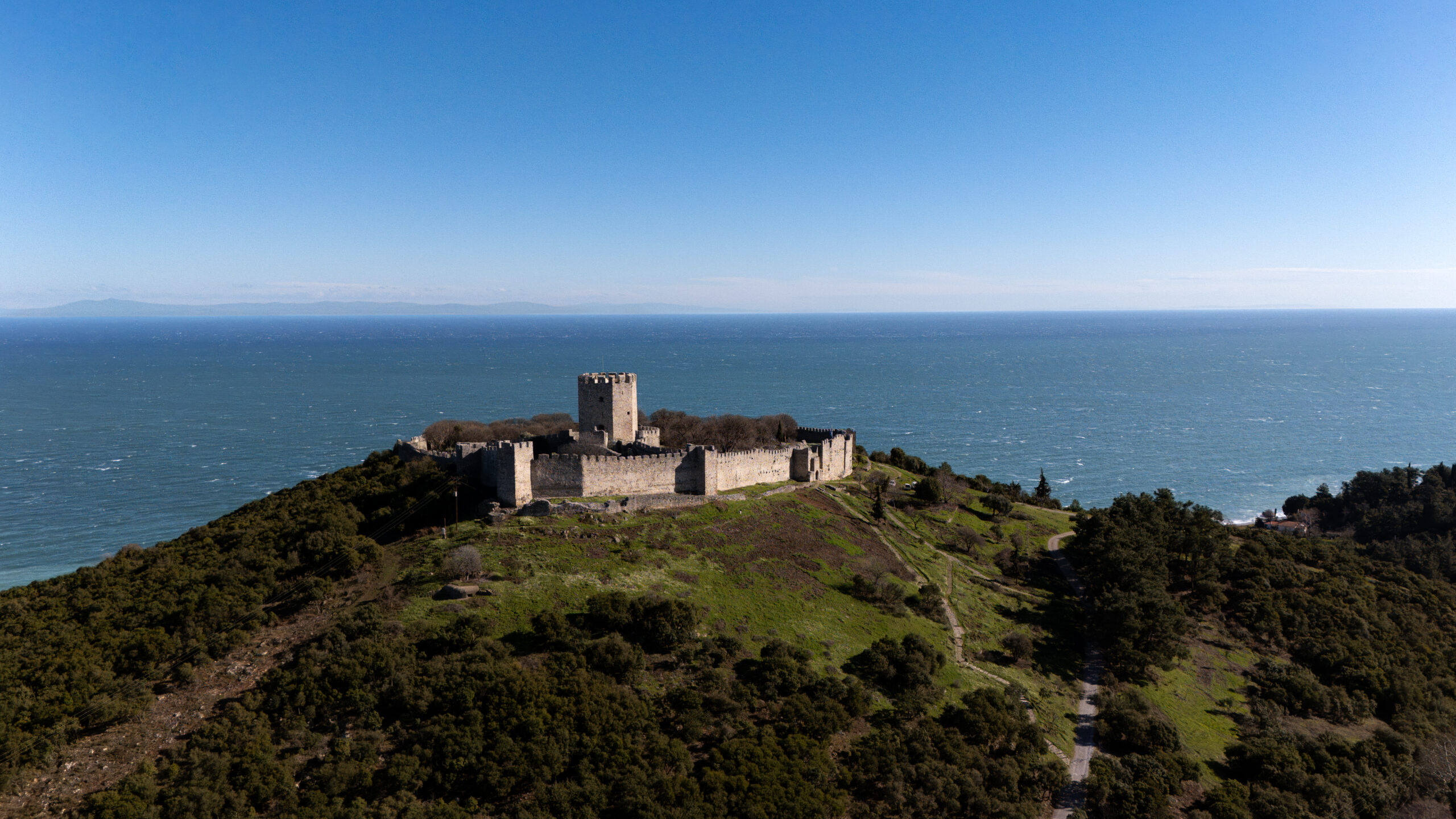
Castle of Platamonas
© Panagiotis Meliadis | Drone Photography
Destination storytelling and branding
The science of stories
Human beings are wired for narrative. Storytelling helps create emotional connections between brands and consumers. Destinations are no exception: they become “storyscapes” where visitors co‑create meaning with locals. Travel storytelling should therefore sit at the heart of any digital marketing strategy.
The Solimar article notes that stories are more than buzzwords; they can increase an object’s value by thousands of percent. For destinations, stories differentiate one place from another and make experiences memorable. Instead of bombarding audiences with facts, effective storytelling evokes feelings of discovery, belonging and wonder.
Co-creation and authenticity
Destination management organisations (DMOs) must curate stories with local stakeholders and encourage visitors to share their own narratives. Authenticity matters more than perfection; travellers seek connections with real people, traditions and landscapes. In my own projects, I work closely with municipalities, hotels and residents to capture voices and visuals that reflect local culture. This collaborative approach builds trust and ensures that marketing doesn’t feel like advertising—it feels like invitation.
Long-term vision
Brand building is a long game. Aerial photos or viral videos may attract attention, but sustained storytelling and consistent brand identity are what transform curiosity into loyalty. That’s why I treat each piece of content—whether a 30‑second reel or a 2,000‑word blog post—as a chapter in a bigger narrative. For the Castle of Platamonas, the narrative includes thousands of years of history, local pride, my childhood memories and the promise of new perspectives.
Case study – The Olympus Riviera digital campaign
In 2024–2025 the Pieria Tourism Development and Promotion Organization (P.O.T.A.P.) partnered with Marketing Greece to launch the “Travel Reimagined Pieria – Olympus Riviera” campaign. The initiative leveraged cinematic visuals and authentic storytelling to showcase Pieria’s mountains, beaches and vibrant local life. By focusing on experiences rather than promotions, the campaign positioned Pieria as a sustainable destination for modern travellers.
Key elements included:
- Breathtaking natural landscapes and adventures. The campaign highlighted hiking on Mount Olympus, mountain biking and water sports that showcase the region’s biodiversity.
- Traditional villages and cultural heritage. It emphasised the charm of historic settlements, inviting visitors to explore centuries‑old architecture, crafts and festivals.
- Local gastronomy. Culinary tours showcased Pieria’s products and dishes, encouraging travellers to savour regional flavours.
- Religious destinations and pilgrimage routes. Sacred sites were included to appeal to spiritual tourists.
- Authentic engagement with locals. Workshops and community events encouraged travellers to immerse themselves in local life.
The campaign used cinematic video content and high‑quality photography to capture the majestic peaks, sun‑drenched beaches and traditional ceremonies. Dissemination across social media, especially TikTok, drew strong engagement. By creating a unified brand—the “Olympus Riviera”—the initiative blended mountains, sea, culture and hospitality into a cohesive identity. The result was increased global visibility, year‑round visitation and economic benefits for local communities.
Lessons learned
- Authentic storytelling resonates. The campaign’s success shows that audiences crave real narratives over generic promotions.
- Cinematic visuals amplify appeal. High‑quality images and videos, particularly aerial footage, elevate a destination’s perceived value.
- Multi‑platform distribution matters. Leveraging TikTok and Instagram reached younger audiences and generated engagement.
- Unified branding clarifies identity. The term “Olympus Riviera” provided a memorable, evocative label that combined natural and cultural assets.
- Sustainability and community involvement are essential. Highlighting local traditions, gastronomy and environmental stewardship attracts responsible travellers and supports economic development.
From castle walls to brand stories – Insights for tourism professionals
Tourism boards and municipalities
- Develop long‑term narratives. Build campaigns around stories that evolve over time. Highlight the interplay between history, nature and modern life. For example, the Castle of Platamonas can anchor a narrative that explores Pieria’s ancient roots, Ottoman past, World War II stories and contemporary festivals.
- Invest in high‑quality visuals. Allocate resources to aerial photography, cinematic videography and professional editing. The visual quality of your content reflects the premium nature of your destination.
- Empower locals. Engage residents, artisans and business owners in the storytelling process. Their voices add authenticity and build community pride.
- Coordinate with regional brands. Align local campaigns with regional identities like the Olympus Riviera to benefit from collective marketing efforts.
- Measure emotional engagement. Track not just clicks and views but comments, shares and sentiment to gauge how stories resonate.
Hotels and resorts
- Tell the story beyond your property. Showcase nearby cultural sites, landscapes and local experiences. When guests feel connected to the region, they perceive your hotel as a gateway to a broader story.
- Create immersive content. Use drone footage to reveal your property’s setting—beaches, vineyards, mountain views—and share behind‑the‑scenes moments of your team preparing local dishes or organising events.
- Collaborate with storytellers. Partner with photographers, videographers and writers who understand your destination’s culture. A multi‑disciplinary approach adds depth and variety.
- Offer storytelling packages. Curate experiences for guests, such as guided visits to the castle with historical narratives, sunset photo shoots or cooking workshops with local chefs.
Destination managers and investors
- Prioritise sustainability. Ensure that increased visitation doesn’t undermine the very heritage you promote. The castle’s walls have stood for centuries; your marketing should respect that legacy and support conservation.
- Leverage technology thoughtfully. Drones and digital platforms are tools, not ends. Use them to reveal stories, not to create gimmicks.
- Support education and training. Offer workshops for local creators on drone safety, storytelling techniques and digital marketing.
- Encourage year‑round tourism. By promoting diverse experiences—culture, nature, gastronomy—you attract visitors outside peak summer months, stabilising revenue and reducing pressure on resources.
Future of tourism content – Trends to watch
- The world of tourism marketing is evolving rapidly. Here are some trends I see shaping the next decade:
- Interactive storytelling. Augmented reality (AR) and virtual reality (VR) will allow travellers to explore destinations remotely or overlay historical narratives onto physical visits. Imagine scanning a wall at Platamon and seeing scenes from Byzantine times.
- User‑generated co‑creation. Destinations will increasingly invite visitors to share their own stories, photos and videos. Platforms will integrate these narratives into official campaigns, creating a mosaic of perspectives.
- Personalised content. Data analytics and AI will enable DMOs to tailor stories based on travellers’ interests—history buffs receive deeper historical content, while adventure seekers get trails and sports events.
- Live streaming experiences. Real‑time broadcasts of events, such as a concert at the castle, will reach global audiences, encouraging spontaneous visits.
- Environmental transparency. As travellers become more conscious of sustainability, destinations will need to communicate conservation efforts clearly and incorporate eco‑friendly practices into their stories.
The Castle of Platamonas stands solid, untamed by wind or time. Yet for those of us who grew up beneath its walls, it’s more than stone. It’s a mirror reflecting our own growth—our willingness to risk, adapt and see anew.
In tourism marketing, the same principle holds. Destinations become brands not through slogans but through stories. Aerial photography and cinematic storytelling reveal layers; they turn viewers into participants and foster emotional bonds that outlast transactions. By blending history, personal experience and modern technology, we can transform castles and coastlines into living narratives that attract high‑end clients and support local communities.
As you look at the fortress and the waves below, remember: familiarity breeds comfort, but perspective creates understanding. It’s time to elevate your view.
Castle of Platamonas
© Panagiotis Meliadis | Drone Photography